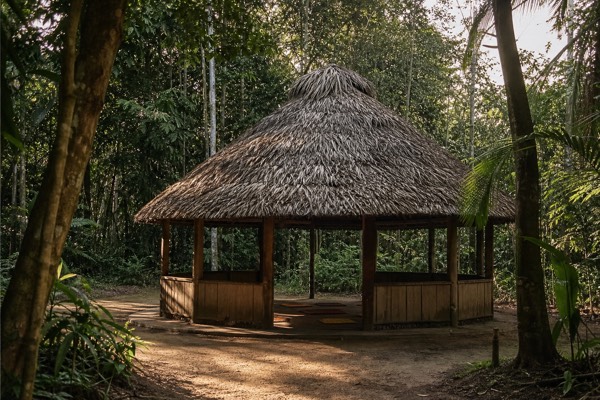
Iquitos / Amazon$1,200–$1,8007 or 12 daysmax 6 guests
AyaSelva Our pick
★ 5 across 29 Google reviews
Publishes real medical screening detail
Read the full review →No. Purging is common and treated as part of the process at traditional centers, but not universal. Why it happens, and when vomiting signals danger.
 Written with Luis Quispe, Peru-based retreat facilitator
Short answer
No. Purging, which usually means vomiting, is common in ayahuasca ceremonies and traditional Amazonian centers treat it as part of the healing process rather than a side effect, but plenty of drinkers get through a given night without it. Intensity varies with the person, the dose, the brew and how strictly the preparation diet was kept. Routine ceremony purging is expected; what is dangerous is drinking on contraindicated medication like SSRIs or with serious heart conditions, because the brew contains MAO inhibitors and raises blood pressure and heart rate.
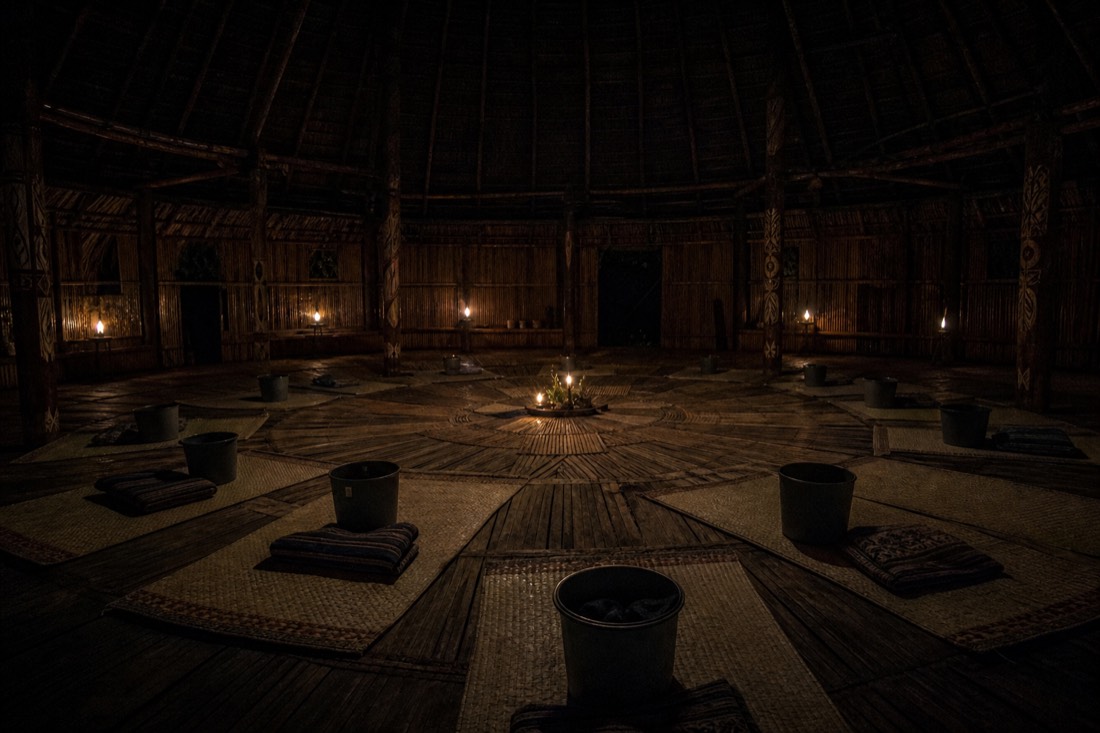
Walk into any maloca before ceremony and you will see a small bucket waiting beside each mat. That is not pessimism, it is furniture. The purge is so woven into Amazonian practice that the brew itself is sometimes just called la purga. And yet the direct answer to this question is still no: vomiting is common, not guaranteed, and its absence does not mean the night did not work.
Ayahuasca is a thick, bitter decoction, in the traditional Peruvian preparation just the vine cooked with chacruna leaf, and it is hard on the stomach by nature. It is also pharmacologically active in a way few things you have ever drunk are: its harmala alkaloids are potent MAO inhibitors. Nausea and vomiting during the hours of effect are a normal part of many people's ceremonies, and so, at times, are other forms of release the tradition also counts as purging: crying, shaking, sweating.
Where a Western clinic would file all this under adverse effects, the Amazonian traditions read it as the work itself: the medicine expelling what needs to leave. You do not have to adopt that frame to notice its practical effect, which is that experienced curanderos are completely unfazed by purging, sing through it, and treat it as information rather than emergency. How much any one person purges varies night to night with dose, the strength of that center's brew, food eaten in the days before, and the person drinking. Some guests purge hard on night one and not at all on night three. Some never do.
The difference between a rough-but-held night and a frightening one is mostly staffing and dosage. In the Reddit voice-of-customer research, weak dosage and safety guidance is one of the recurring complaints about bad centers, while the praised ones pour conservatively for first-timers, keep sober facilitators moving through the space all night, and keep groups small enough that nobody purges unnoticed in a corner. Group size and screening practices are exactly the fields we track in our comparison table. Centers that take the physical side seriously also publish contraindication lists and screen before arrival; AyaSelva's intake, for example, includes a confidential health questionnaire plus a personal call, with a maximum of six guests in the room.
The dieta matters here too, and not only as ritual discipline. Because the brew contains MAO inhibitors, food interactions are real, which is one reason centers restrict what you eat before and during a retreat. A kept dieta tends to mean an easier stomach; a burger in Iquitos the night before ceremony tends to mean the opposite. The full food rules are in our dieta article. If you are unsure whether you could handle the physical side, describe your worries to us and we will tell you plainly which centers hold first-timers closest, free.
Routine purging happens during ceremony, passes, and is watched by facilitators. The danger cases in the record look different, and they are worth being precise about. Mixing the brew with serotonergic medication such as SSRIs risks serotonin syndrome, a potentially fatal reaction, which is why washout periods exist and why hiding medication from a screening form is the single worst decision a guest can make. The brew also raises blood pressure and heart rate, so serious cardiovascular conditions are a contraindication, not a challenge to push through.

Preparation rituals carry their own risks too: the 2015 death of a New Zealand tourist near Iquitos followed a tobacco purge tea taken before ayahuasca, ending in cardiac arrest. Vomiting that comes with chest pain, collapse, or that follows undisclosed medication is a medical emergency, and a legitimate center has an evacuation plan for exactly that. Read who should avoid ayahuasca before you book anywhere, check the wider protocols in our safety hub, and whatever you do, talk to your doctor about your medications rather than stopping anything on your own.
In the Amazonian traditions the purge is a category, not a single act. Crying, trembling and sweating are counted as release alongside vomiting, and several centers also run deliberate daytime cleanses, purgatives and plant baths, that are scheduled practices rather than ceremony surprises. The bucket is one instrument among several.
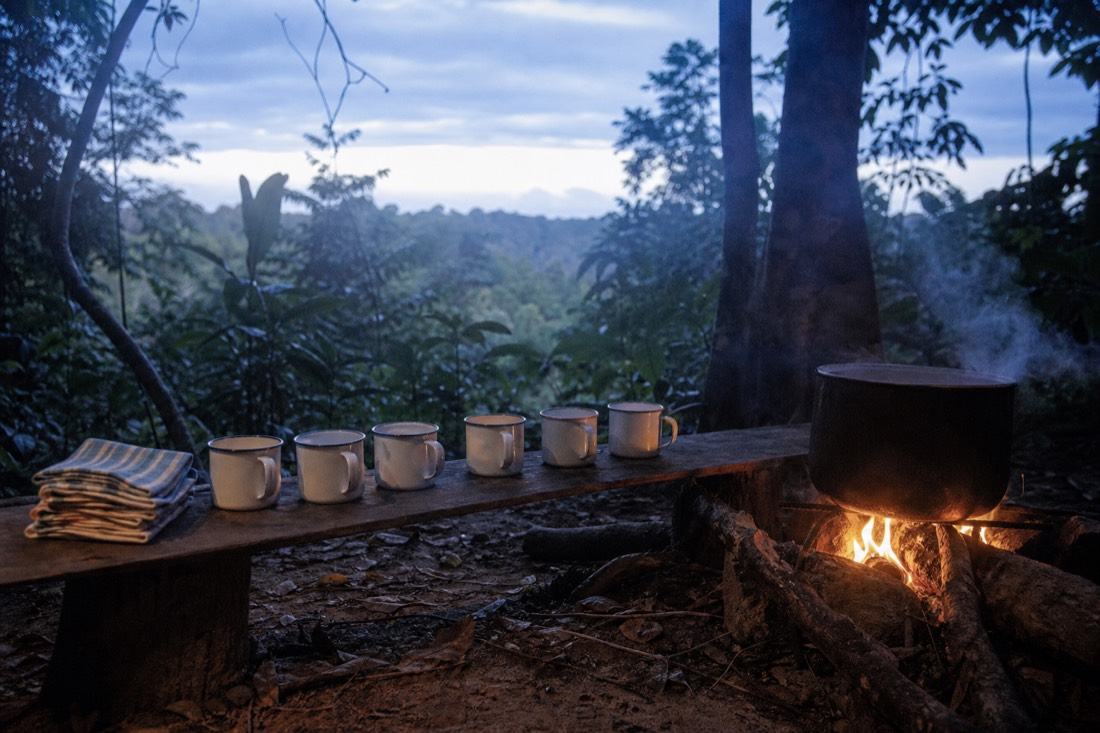
Sorting the forms out matters for a first-timer, because half of the alarming-sounding vocabulary on center websites describes things that happen in daylight, sober, on purpose.
| Form of purge | When it happens | Where it appears in our research |
|---|---|---|
| Vomiting | During ceremony, hours of effect | Universal; buckets beside every mat are standard maloca furniture |
| Crying, shaking, sweating | During ceremony | Counted as release by the traditions; noted across guest accounts in our research |
| Purgative or vomitivo cleanse | Daytime, scheduled, before or between ceremonies | Nihue Rao includes a purgative in its program; Niwe Rao Xobo lists vomitivo cleanses among its treatments |
| Plant and flower baths | Daytime, between ceremonies | Selva Madre and La Luna del Amazonas both include medicinal plant baths; framed as gentler cleansing |
| Tobacco purge | Preparation ritual at some centers | The one with a death on record; treat it with the same screening seriousness as the brew itself |
The scheduled cleanses are voluntary at the centers that publish details, and asking how each one works is a normal intake question, not a nuisance. The tobacco row is there deliberately: the 2015 Kapitari case shows preparation rituals carry real cardiovascular risk, which is why they belong inside screening, not outside it.
Ayahuasca's harmala alkaloids inhibit monoamine oxidase, the enzyme your gut uses to process certain compounds. That is what makes the brew work, what makes aged and fermented foods a genuine risk, and what makes serotonergic medication the gravest interaction. Nausea sits on top of a thick, bitter decoction your stomach was never going to love.
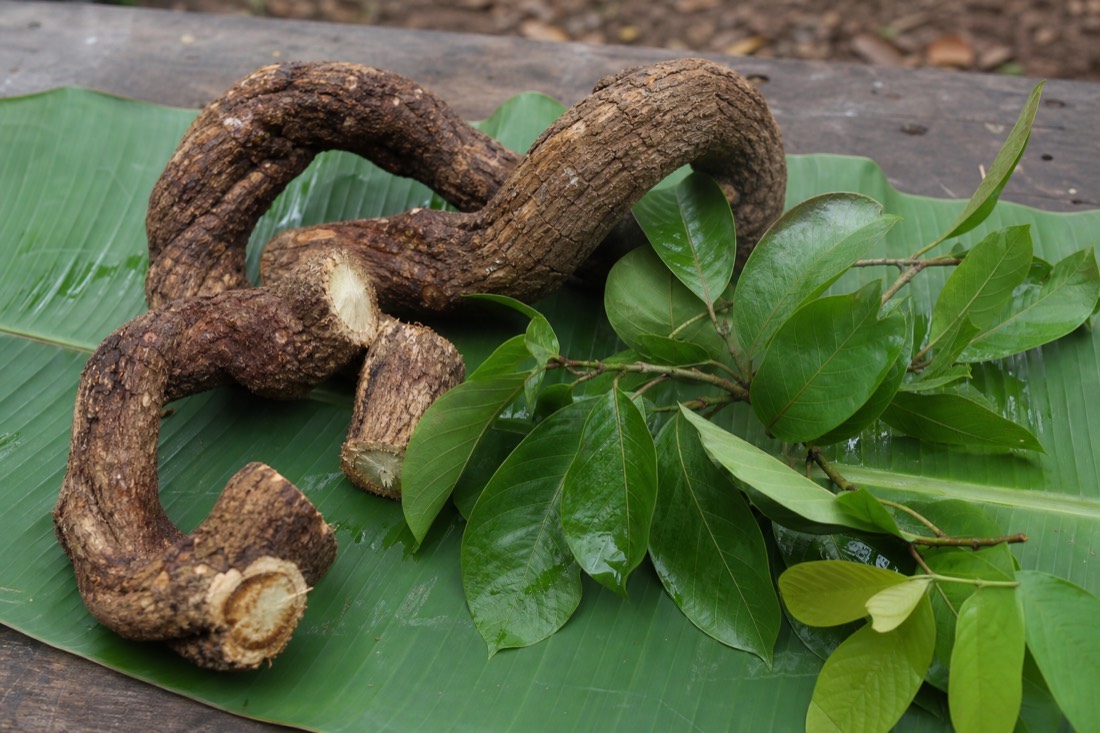
The plain-language version of the pharmacology on file:
| What is in play | What it does in plain language | Where the fact stands |
|---|---|---|
| Harmala alkaloids in the vine | Potent MAO inhibitors; they slow the enzyme that would otherwise break down the brew's actives in your gut | Callaway and Grob, 1998, Journal of Psychoactive Drugs; ICEERS safety profile |
| Tyramine in aged, cured, fermented food | With MAO inhibited, tyramine can push blood pressure up; this is the classic MAOI food interaction | ICEERS good practice guidance |
| SSRIs and other serotonergic drugs | Combined with MAO inhibition, risk of serotonin syndrome, a potentially fatal reaction; washout only under medical supervision | Callaway and Grob, 1998; harm-reduction consensus per ICEERS |
| The brew's cardiovascular push | Blood pressure and heart rate rise during effect; serious heart conditions are a contraindication | ICEERS safety profile |
Notice what the table does not contain: percentages. Nobody has a defensible number for how likely any one drinker is to vomit on any one night, and our research pass specifically flags stronger-sounding pharmacology claims that failed verification. The honest statement is the one the tradition arrived at by observation: common, variable, survivable at a well-run center, and dangerous mainly in combination with the wrong medication, the wrong food or the wrong heart.
Two of the dieta's rules are pharmacology in traditional clothes, and those two are the ones that change your night physically. Cutting tyramine-heavy foods removes a real blood-pressure risk, and full medication disclosure removes the serotonin-syndrome risk. The rest of the diet shapes how rough the stomach's share of the work gets.
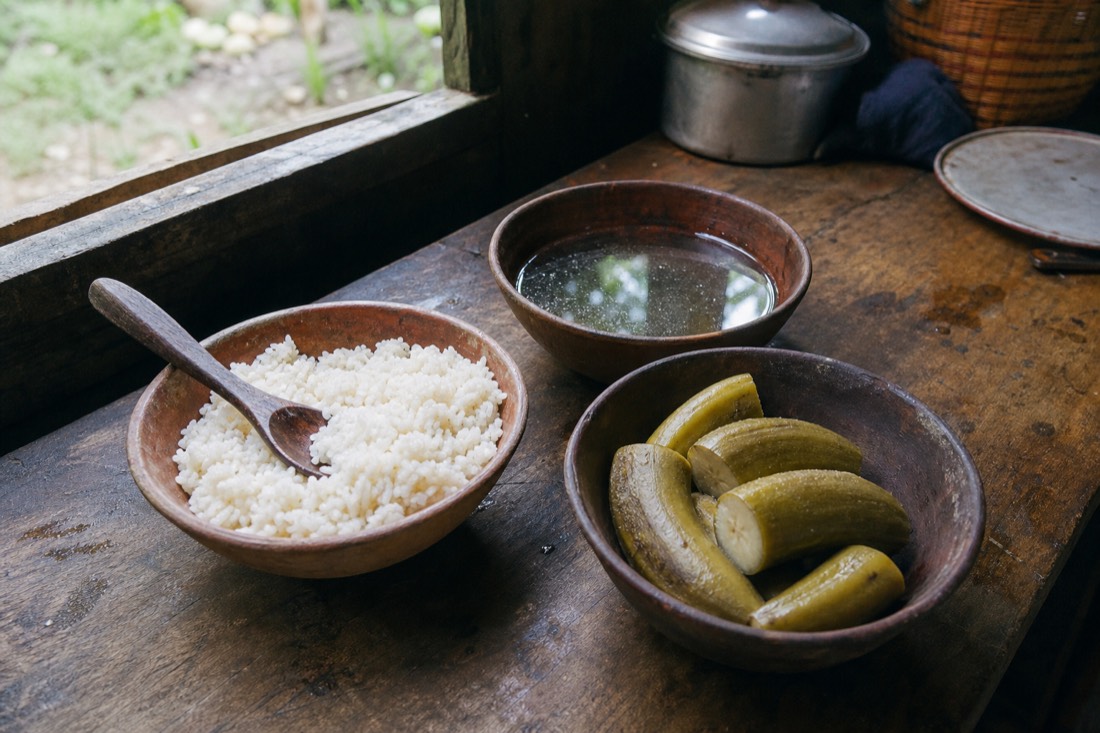
Here is each common rule tied to its actual reason, drawn from our full dieta breakdown:
| Dieta rule | Layer | The reason behind it |
|---|---|---|
| No aged, cured or fermented foods | Medical | Tyramine plus MAO inhibition can spike blood pressure |
| Full medication disclosure, washout with your doctor | Medical | Serotonergic drugs plus the brew risk serotonin syndrome |
| No alcohol or recreational drugs | Both | Interaction risk, and arriving with a clear system |
| Reduced salt, sugar, oil; no pork | Traditional | The sensitivity the tradition works with; guests keeping it report easier stomachs |
| Light eating on ceremony day | Practical | Less volume, gentler purge; the near-universal center instruction |
| Quiet and abstinence before arrival | Traditional | The state you carry into the maloca |
The pattern guests report, in our research and across the Reddit threads, is blunt: kept dieta, easier purge; broken dieta, harder purge. That is not a controlled study and we will not dress it up as one, but it is consistent, it matches the pharmacology on the medical rows, and it is entirely under your control in the last week before you fly.
The centers with the strongest records publish their physical-side arrangements in unusual detail: guest caps, sober staffing counts, first-aid capability, evacuation logistics. Those published facts, not reassuring adjectives, are what separate a held purge from a frightening one, and they are exactly the fields our comparison tracks.

What the published pages of centers in our directory say about holding the room:
| Center | Group cap | Who is in the room, and what else is on record |
|---|---|---|
| AyaSelva | 6 | Health questionnaire plus personal intake call before arrival; published contraindication list; brew cooked on site from vine and chacruna only |
| La Luna del Amazonas | 10 | Minimum two sober facilitators per ceremony, one male and one female; staff trained in first aid and CPR; 24/7 boat to Iquitos, about 40 to 60 minutes; two transfers in over ten years, both mild allergic reactions |
| Selva Madre | 8 | Three healers plus a three-person team present in every ceremony, all abstaining; staff accompany any guest needing evacuation |
| Dreamglade | 10 | Maestra Dominga and Maestro Raul lead every ceremony with a support team; every inquiry screened personally by Paul; two-week preparation diet required |
| Nihue Rao | Varies | 24-hour support team; integration conversations three times a week; four ceremonies a week with a purgative in the program |
| Temple of the Way of Light | About 20 | Screening questionnaire developed with ICEERS, reviewed by a licensed doctor and psychologist |
| Onikano | Small groups; one Reddit account mentions up to 15 | Application form covering health, medications and history, read personally, answered within 48 hours |
Read the second column against your own temperament. If the thought of purging in front of strangers is part of the dread, the six-guest room and the twenty-guest room are different propositions, whatever else the centers share.
Normal purging happens during the hours of effect, passes, and is watched by sober staff who have seen it a thousand times. The emergencies in the record look different: chest pain, collapse, reactions tied to undisclosed medication, or trouble following preparation rituals. Different look, different response, and a real center knows which is which.
| What you see | What it means |
|---|---|
| Vomiting, crying, trembling during the ceremony, facilitator checking in | The normal purge; watched, expected, sung through |
| Purging hard on night one, not at all on night three | Normal variability; dose, brew and person all move night to night |
| Chest pain, collapse, or vomiting that will not stop after effects fade | Emergency; this is what evacuation plans exist for |
| Any reaction in a guest who did not disclose medication | Emergency risk; the 2025 Loreto death was reported with possible undisclosed antibiotic use in the picture |
| Distress during a tobacco purge or other preparation ritual | Take it as seriously as ceremony itself; the 2015 death followed exactly this |
| Signs of allergic reaction | Rare but real; La Luna's only two hospital transfers in a decade were mild allergic reactions |
The rows on the emergency side share one feature: almost all of them are preventable at intake. Screening exists to catch the heart condition, the SSRI, the antibiotic nobody mentioned. Which is why the honest advice runs backwards from where most nerves point: worry less about the bucket, and more about whether your center's screening would catch what yours might miss. The full sourced incident record lives on our safety hub.
You are in the majority, not the minority. Purging intensity is one of the recurring fears in the r/Ayahuasca first-timer threads, and the practical answer is center choice: small groups, conservative first pours and named sober staffing shrink the scary version of the night to something guests consistently describe as manageable.
Take the fears one at a time, against what the record actually shows:
| The worry | What the record says |
|---|---|
| "I will be sick and alone in the dark" | The staffing numbers above are the answer; at the centers we track, sober facilitators are in the room all night, and two-per-ceremony minimums are published policy at La Luna |
| "It will not stop" | Purging tracks the hours of effect and passes; nights vary, and plenty of guests get through some nights with no purge at all |
| "Everyone will watch me" | Buckets beside every mat exist because purging is unremarkable there; nobody in a maloca is grading you; a six-guest cap makes the room smaller still |
| "The taste alone will finish me" | The brew is genuinely bitter; a conservative first pour, which praised centers give first-timers by default, keeps volume down |
| "Purging means something went wrong" | The tradition reads it as the work itself; curanderos sing through it and treat it as information |
Fear of the purge is also worth saying out loud during intake. A center that responds with specifics, who will be near you, how they dose first-timers, what happens if you struggle, is showing you its real safety culture. One that waves the question away has answered a bigger question. If you want help finding centers that hold anxious first-timers closest, our guide to what happens at a retreat walks the whole week, night by night.
Luis Quispe has supported international guests at Peru retreats since 2022 and facilitated retreat experiences since 2023, more than a thousand participants by his own count. His consistent observation: the guests who fear the purge most beforehand are rarely the ones who struggle most on the night, and preparation moves the odds more than courage does.
What he actually tells them is unglamorous. Keep the dieta properly for the full window, not just the last two days, because the guests who arrive clean consistently have the easier stomachs. Eat light on ceremony day and say so if you have not. Tell the facilitators about the fear itself before the first ceremony; it changes how closely they check on you, and that is the system working, not a confession. Sit where you can see a facilitator. And let the maestro pour conservatively on night one rather than proving anything; there are more nights. The one thing he asks guests never to do is manage the fear by hiding something, a skipped disclosure or a smuggled snack, because every dangerous row in the tables above starts exactly there. If the physical side is the thing standing between you and booking, describe it to us and we will tell you honestly which centers hold first-timers closest, free.
Centers our research points to for this topic. Nobody pays for placement; every card links our full, sourced review.
Iquitos / Amazon$1,200–$1,8007 or 12 daysmax 6 guests
★ 5 across 29 Google reviews
Publishes real medical screening detail
Read the full review →Iquitos / Amazon$545–$4,7255, 7, 8, or 10 days, customizable
★ 4.9 across 154 TripAdvisor
Confirmed operating in 2026
Read the full review →Iquitos / Amazon$1,150–$2,100
★ 5 across 67 AyaAdvisors
Confirmed operating in 2026
Read the full review →You can improve your odds, not guarantee it: keep the dieta strictly, eat light on ceremony day, and let the curandero pour you a conservative first dose. Many guests get through some or all nights without vomiting. Treating the purge as acceptable rather than fighting it is, per most experienced guests, the easier path.
Ordinary ceremony purging at a staffed center is expected and watched. The documented dangers are different things: serotonin syndrome from mixing the brew with SSRIs or other serotonergic drugs, cardiovascular strain in people with heart conditions, and risky preparation rituals like tobacco purges. That is what medical screening exists to catch; see who should avoid ayahuasca.
No. Purging varies by person, night, dose and brew, and traditional curanderos do not grade a ceremony by the bucket. Guests at well-run centers report strong experiences both with and without vomiting, and release can take other forms entirely.